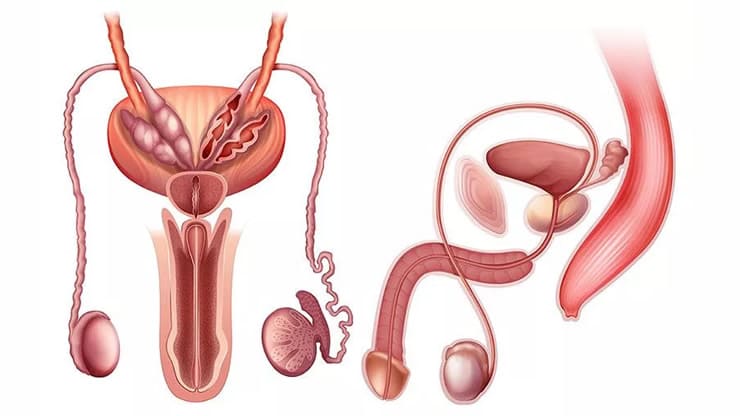
The urethra is the canal that carries urine out of the bladder. It is about 20 cm in men and about 4 cm in women. The most important and most common cause of urethral stenosis is previous urological surgeries and interventions. For example, it may occur after dropping a stone or it may be seen after traumatic improper catheterization. Apart from this, stenosis can also be seen after pelvic bone fractures, trauma, and accidents.
Patients have symptoms and complaints such as decrease in urine flow rate, pressure, fine voiding, pain during voiding, inability to empty the bladder for a long time or not completely, and voiding in the form of dripping.
In fact, a preliminary diagnosis is made with the detailed anamnesis of the patient. However, in order to confirm the diagnosis and to get an idea about the degree of stenosis, uroflowmetry, that is, voiding testis, is performed. After the patient is squeezed into the urine, the flow rate is measured by making the uroflowmeter device run. In addition, a medicated film called retrograde urethrography can also be taken. However, we generally prefer it in patients with a history of recurrent stenosis and in complicated cases. It is not a test performed for every stenosis suspicion.
There are closed or open surgeries in urethral stricture. Although closed surgeries performed with endoscopic method are more comfortable for the patient, they are not suitable for every patient. Closed surgeries are procedures that take 15-30 minutes. It is sufficient for the patient to stay in the hospital for 1 night. A catheter is placed in these patients after the stenosis heals and does not occur immediately. The probe stays on the patient for 3 to 5 days. It is very effective especially in stenosis less than 1 cm. Although closed surgeries are reproducible, they are generally not recommended. If the stenosis recurs in a short time and frequently, open surgery options should be considered. Open surgery has a high success rate and a longer lasting effect.